
Three Anaheim Hills Restaurants Temporarily Displaced as Shopping Center Undergoes Large-Scale Tenting
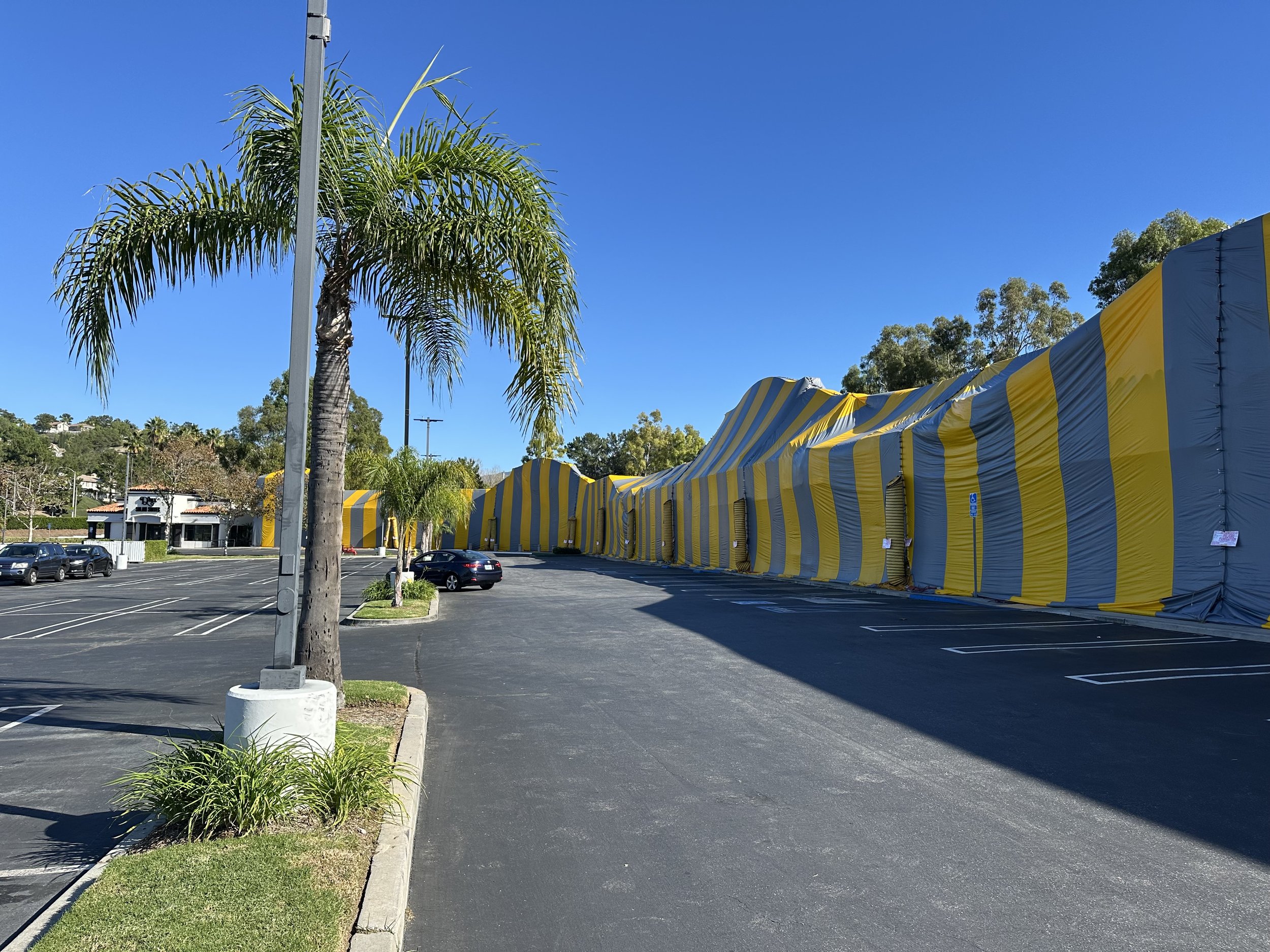
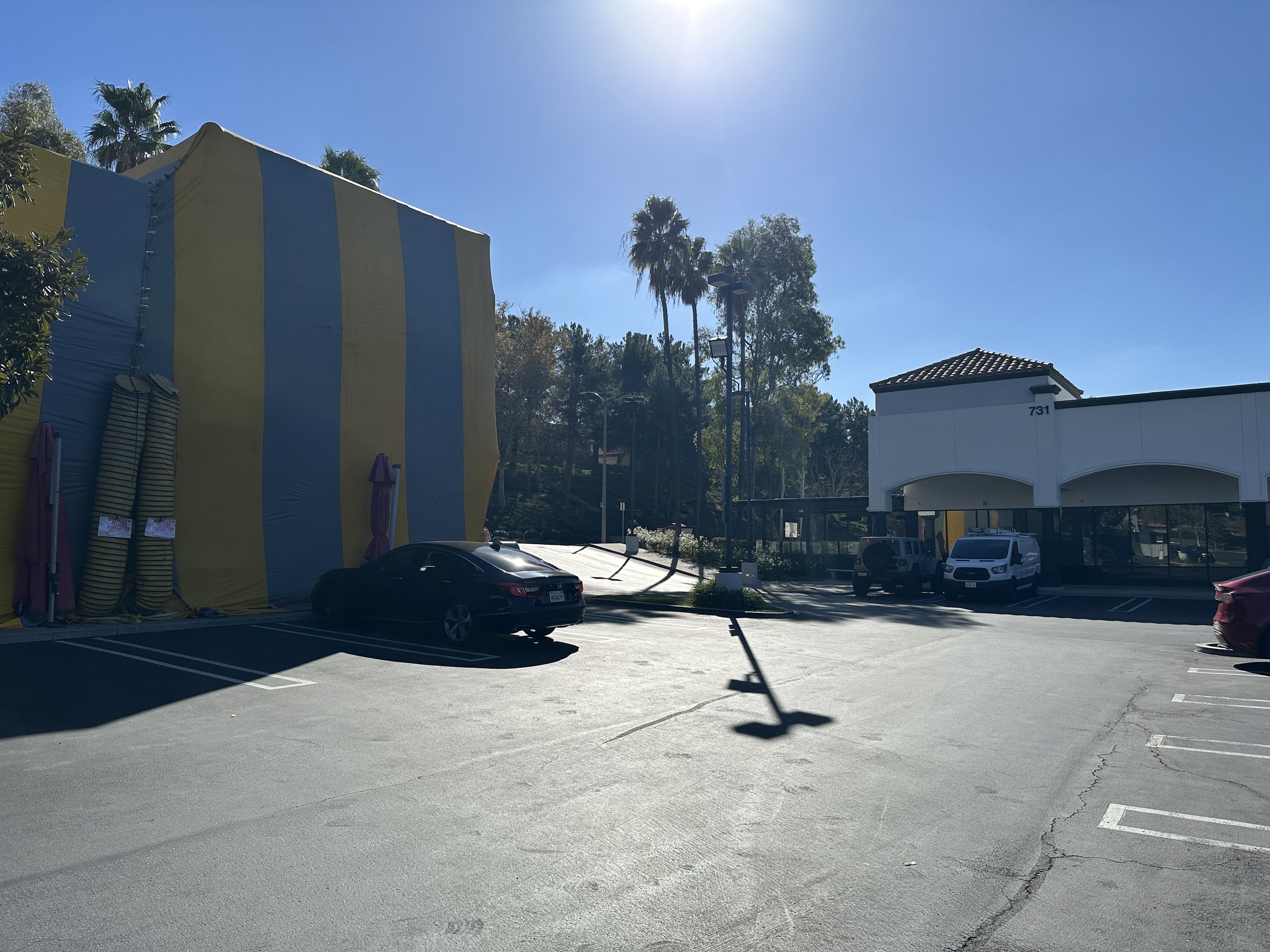
Sycamore Canyon Plaza, Siam Savory & Smash Haus (right)
What the tenting operation means, how it could affect local restaurants, and why community support matters now.
By Food Co. Marketing | Local Food & Business
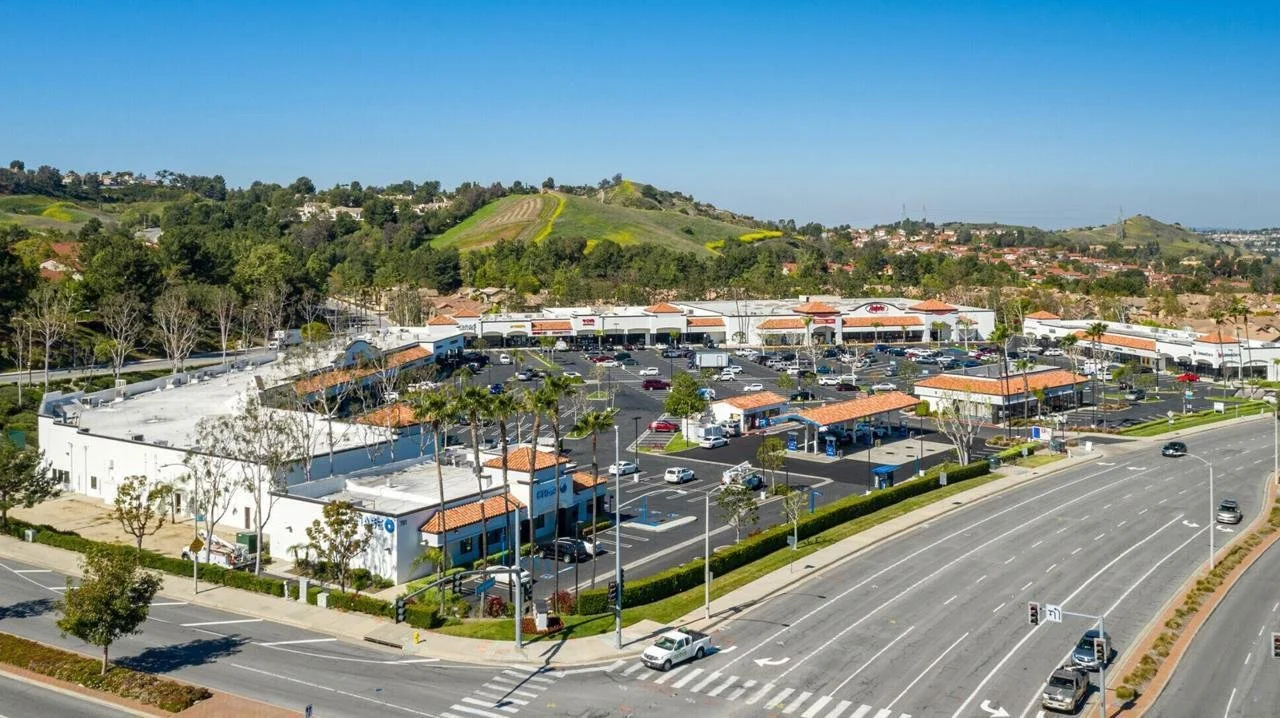
Sycamore Canyon Plaza TENTED!
Something unexpected is happening at a shopping center along South Weir Canyon Road in Anaheim Hills.
What’s Going On?!
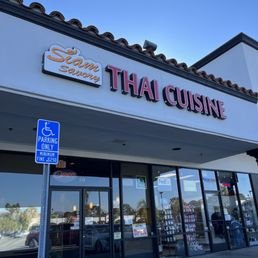
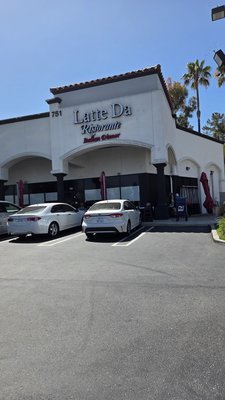
A substantial section of the property has been covered with large yellow-and-gray fumigation tarps, enclosing an entire row of commercial storefronts. The operation has temporarily disrupted several businesses, including three local restaurants: Latte Da Ristorante, Smash Haus, and Siam Savory Thai Cuisine.
For customers, it means some familiar dining destinations are temporarily inaccessible. For the businesses themselves, however, the implications go considerably further than a few days without customers.
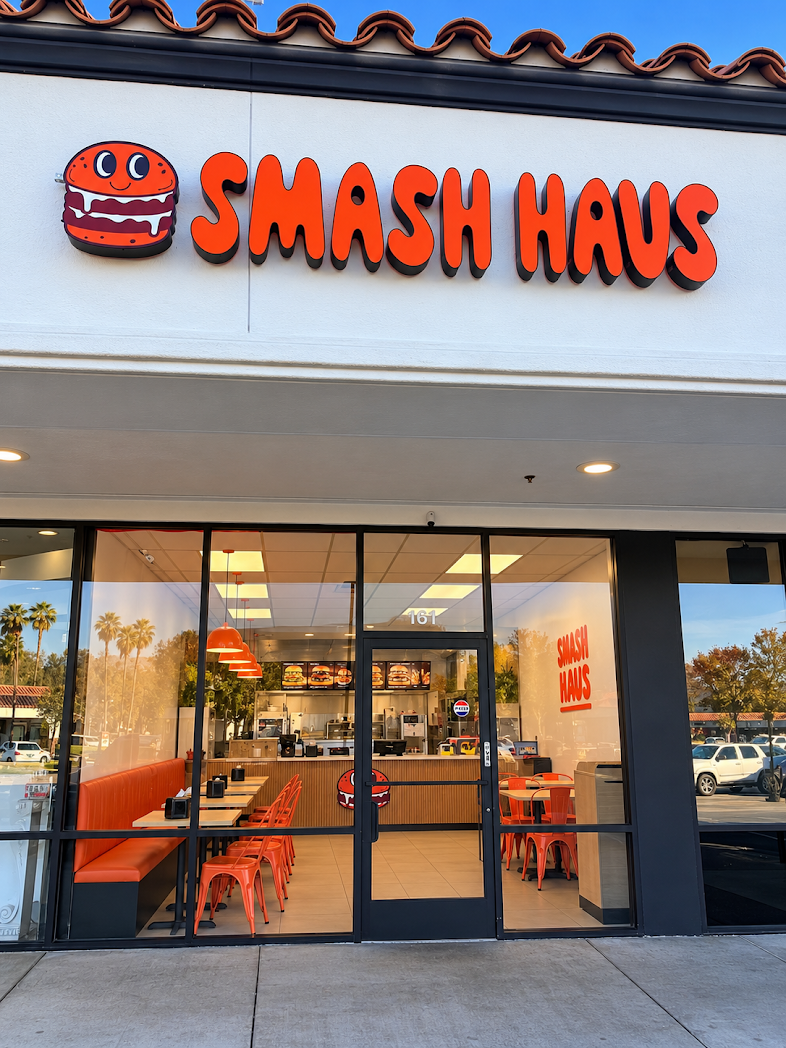
Smash Haus temporarily CLOSED after One Month!
One of the restaurants, Smash Haus, had only recently opened its doors, making the timing particularly challenging.
So what exactly is happening? Why are these buildings covered? How long could the restaurants be closed, and what does an unexpected interruption like this mean for a restaurant’s bottom line?
We took a closer look.
WHAT IS HAPPENING?
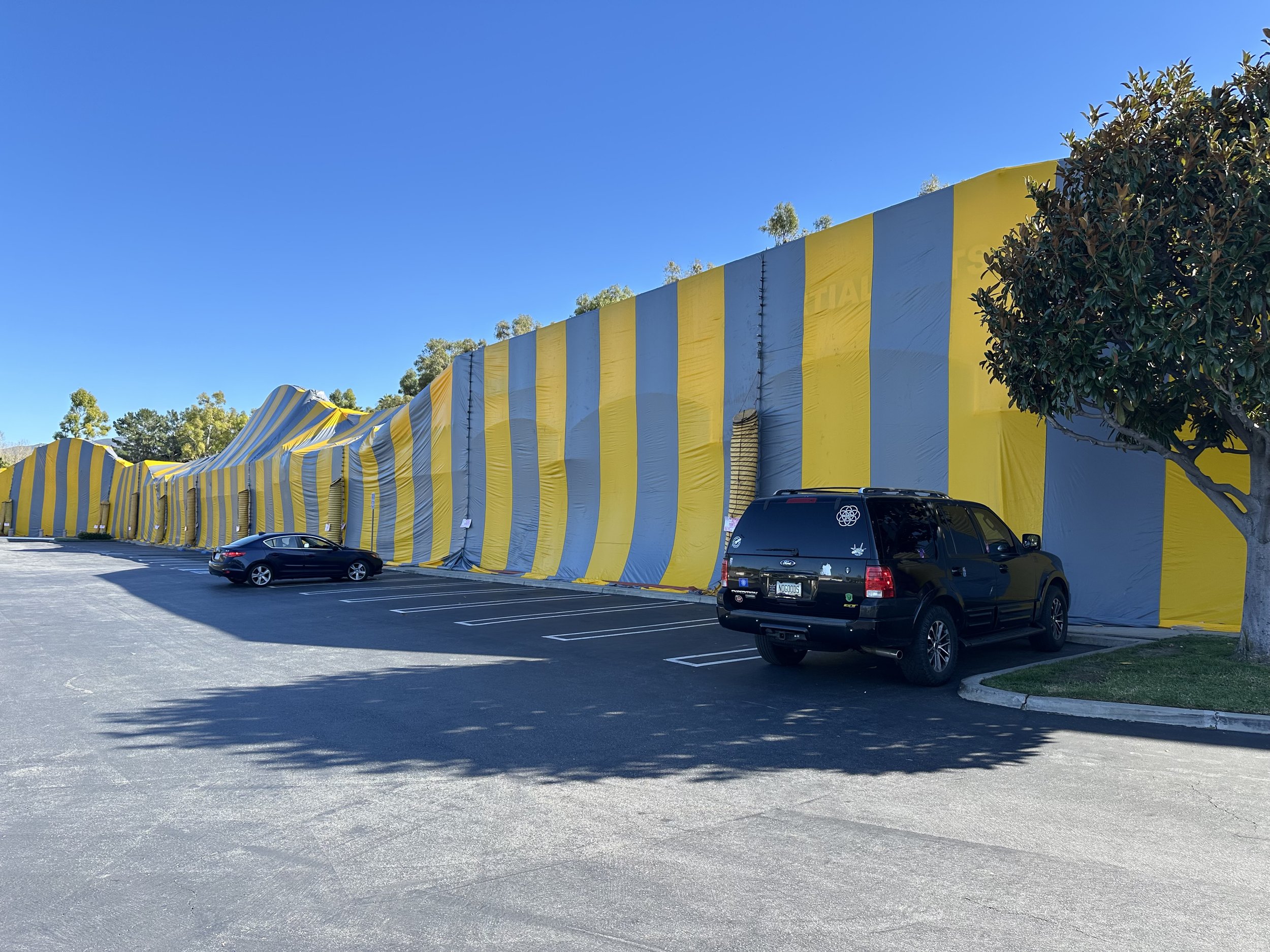
The large coverings surrounding the shopping center are consistent with a process known as structural fumigation, commonly referred to as tenting.
Unlike conventional pest control, which typically involves treating specific areas, structural fumigation involves enclosing an entire building in specialized tarps and introducing a fumigant gas to eliminate pests throughout the structure.
The coverings are designed to contain the gas during treatment, allowing it to reach areas that conventional treatments may not adequately penetrate, including wall cavities, structural wood, and other difficult-to-access spaces.
The process involves several stages:
Preparation: The building is prepared for treatment, and occupants must vacate the affected structure.
Enclosure: Specialized tarps are installed and sealed around the building.
Fumigation: A licensed fumigation operator introduces the appropriate fumigant.
Aeration: Following treatment, the building is ventilated to remove the gas.
Clearance: The structure is tested to verify that it meets the required safety standards before reentry is permitted.
In California, warning signs must identify the fumigant and its active ingredient. A licensed operator must also complete the required testing and post a notice of reentry before the building can be occupied again.
This is an important distinction: removing the tarps does not automatically mean a business can reopen. The building must first be cleared.
Sources: California Department of Public Health; California Department of Pesticide Regulation; California Structural Pest Control Board regulations.
WHY IS IT HAPPENING?
Although the exact reason for the current operation has not been independently confirmed, the type of enclosure visible at the property is consistent with whole-structure fumigation.
There are several possible reasons a commercial building might undergo this type of treatment.
1. Drywood termites
One of the most common reasons for structural fumigation in Southern California is a drywood termite infestation.
Unlike subterranean termites, drywood termites can live within the wood they consume. Their colonies may exist inside structural framing, roof components, and other wooden materials.
When infestations are widespread or difficult to reach, whole-structure fumigation may be recommended.
2. Other wood-destroying pests
Other insects that infest structural materials may also require a comprehensive treatment approach, depending on the species and extent of the infestation.
3. Bed bugs and other structure-infesting pests
Whole-structure fumigation is not exclusively associated with termites. California public health guidance identifies bed bugs and other structure-infesting pests among the targets of sulfuryl fluoride fumigation.
What we don’t know yet
We have not confirmed which pest prompted this particular treatment, whether an inspection identified an infestation, or whether the entire operation was initiated as preventive maintenance.
It’s also important not to assume that every business inside the covered building had an infestation. A whole-structure treatment can affect multiple tenants because they occupy the same enclosed building.
HOW LONG WILL THE RESTAURANTS BE CLOSED?
This is probably the biggest question for customers and restaurant owners alike.
Structural fumigation is not generally a weeks-long process. For a typical fumigation, the treatment itself can take approximately 16–30 hours, followed by ventilation and safety testing.
For comparison, Orange County fumigation providers commonly describe a three-day process for a typical residential structure.
Commercial properties can require different schedules depending on their size, configuration, preparation, treatment requirements, and clearance results.
For the Anaheim Hills businesses, a reasonable preliminary planning estimate is approximately 2–4 days, although this is not a confirmed reopening schedule.
There is currently no independently verified reopening date for the three restaurants.
Ultimately, the restaurants cannot resume normal operations until their affected premises have received the required clearance.
Customers should check directly with each restaurant for reopening announcements before making a trip.
WHAT DOES THIS MEAN FOR THE RESTAURANTS?
For a restaurant, being closed unexpectedly is more complicated than simply putting a sign on the door.
Restaurants operate on daily sales. Revenue comes from breakfast, lunch, dinner, takeout, delivery, catering, and customers who make reservations or stop by regularly.
When a restaurant cannot open its doors, that revenue opportunity disappears.
But many of its expenses don’t.
Depending on the circumstances, a restaurant may continue to incur:
Rent and common-area maintenance expenses.
Insurance and other operating expenses.
Payroll and employee-related obligations.
Equipment leases and financing payments.
Vendor commitments and outstanding invoices.
Inventory losses involving perishable ingredients.
Marketing and advertising expenses.
Some costs may be reduced or paused during a closure, and responsibility for certain expenses may depend on the lease, insurance coverage, and reason for the interruption.
However, the financial pressure can be significant, particularly for independent restaurants that depend on consistent daily cash flow.
HOW MUCH CAN A TEMPORARY CLOSURE COST?
Let’s look at a hypothetical example.
Suppose a restaurant normally generates $2,000 in gross sales per day.
Closure period
Potential gross sales not generated
2 days
$4,000
3 days
$6,000
4 days
$8,000
5 days
$10,000
7 days
$14,000
These numbers are illustrative, not actual sales figures for the affected restaurants.
It’s also important to distinguish lost sales from lost profit. A restaurant avoids some variable expenses when it isn’t serving customers, but its fixed expenses and other obligations may continue.
There can also be a second financial impact after reopening.
Customers develop habits. They have their favorite breakfast spots, lunch destinations, and places they visit after work. When a business becomes temporarily unavailable, those customers may establish new routines elsewhere.
Getting everyone back through the door can take additional effort.
For an established restaurant, this is an interruption. For a newer restaurant, it can be a much more complicated challenge.
THE RESTAURANTS AFFECTED
Three restaurants that deserve some attention during this interruption are located within the affected commercial property at 751 S. Weir Canyon Road.
LATTE DA RISTORANTE
A neighborhood destination for Italian food, breakfast, and brunch.
Latte Da Ristorante has established itself as a neighborhood dining option in Anaheim Hills, offering a combination of Italian cuisine, breakfast, and brunch.
Its menu and dining experience appeal to different occasions, from an early morning meal to an evening dinner.
For restaurants with established customer bases, consistency is important. Regular customers often build their weekly routines around familiar places.
A temporary closure interrupts that relationship, even when the reason is entirely outside the restaurant’s control.
As the property undergoes treatment, we hope Latte Da Ristorante can return to serving its neighborhood customers soon.
SMASH HAUS
A new neighborhood burger destination that had only just opened.
Perhaps the most difficult timing of the three closures belongs to Smash Haus.
The family-owned burger restaurant recently opened in Anaheim Hills, introducing its smash burger concept to the local community.
The restaurant focuses on made-to-order burgers, fresh-cut fries, and house-made sauces. Its concept is built around a straightforward idea: good burgers, made fresh, with an experience that gives customers a reason to come back.
According to the opening timeline shared with Food Co., Smash Haus had only been operating for approximately one month when the tenting operation affected the property.
That’s a particularly important detail.
The first several months of a restaurant’s operation are critical. Owners are introducing their concept, building brand awareness, establishing customer relationships, learning sales patterns, and working to develop repeat business.
A new restaurant is still building momentum.
It is trying to turn first-time customers into regulars, generate word-of-mouth recommendations, and establish itself as part of the neighborhood.
An unexpected closure during this period can interrupt that momentum.
There are several potential challenges:
Lost customer acquisition: Fewer opportunities to introduce the restaurant to new customers.
Interrupted momentum: Early interest and repeat visits may be disrupted.
Cash flow pressure: Opening expenses and operating commitments don’t necessarily disappear during a closure.
Marketing disruption: Advertising and promotional campaigns may need to be adjusted.
Customer retention: The restaurant must reconnect with customers once it reopens.
This doesn’t mean Smash Haus cannot recover. A short interruption is not necessarily a long-term setback, and the business has an opportunity to reconnect with the community when it returns.
But the timing makes community support particularly meaningful.
For a restaurant that is still introducing itself to the neighborhood, those first months matter.
SIAM SAVORY THAI CUISINE
A local destination for Thai comfort food and neighborhood dining.
Siam Savory Thai Cuisine brings another dining option to the Anaheim Hills community, specializing in Thai favorites, including curries, stir-fried dishes, noodle soups, and traditional noodle dishes.
Its menu includes familiar favorites such as Pad Thai, Pad See Ew, Tom Yum, and a variety of curries.
For neighborhood restaurants, regular customers are an important part of the business. Lunch regulars, families, takeout customers, and people who return for their favorite dishes all contribute to a restaurant’s ongoing success.
An unexpected interruption can affect those routines and temporarily redirect customers elsewhere.
We look forward to seeing Siam Savory Thai Cuisine reopen and welcome its customers back.
IT’S NOT JUST THREE RESTAURANTS
While Latte Da Ristorante, Smash Haus, and Siam Savory Thai Cuisine are the three restaurants we’re highlighting, they aren’t the only businesses affected by the operation.
The photographs show a substantial portion of the commercial building enclosed by the yellow-and-gray tarps, including other storefronts and commercial spaces.
This is a reminder that the effects of a building-wide treatment can extend beyond the businesses customers immediately recognize.
Employees, neighboring tenants, service providers, and the surrounding business community can all experience some degree of disruption.
For a neighborhood shopping center, individual businesses contribute to a larger commercial ecosystem. Restaurants bring people to the property, and those visitors may also shop, run errands, or visit other businesses while they’re there.
When several storefronts become inaccessible at the same time, the effects can extend beyond the individual businesses.
HOW CAN THE COMMUNITY HELP?
The good news is that a temporary interruption doesn’t have to become a lasting setback.
There are practical ways the Anaheim Hills community can support these restaurants.
1. Keep them on your list.
Don’t forget about your neighborhood restaurants just because they’re temporarily unavailable. Make a note to visit when they reopen.
2. Follow their social media accounts.
Reopening announcements, updated hours, and special promotions will likely be communicated through their social media channels.
3. Share their announcements.
A simple repost or recommendation can help reconnect restaurants with customers who may not know they’re back in business.
4. Make a visit when they reopen.
Whether it’s breakfast at Latte Da, a burger at Smash Haus, or Thai food from Siam Savory, choosing to spend your money at local businesses helps support the people operating them.
5. Leave a review.
If you’ve enjoyed a restaurant, share your experience. Positive reviews and genuine recommendations can help introduce these businesses to new customers.
For Latte Da Ristorante, Smash Haus, and Siam Savory Thai Cuisine, we hope this is a short interruption and that all three restaurants are back up and running soon.
And for Smash Haus, which was just beginning its journey in Anaheim Hills, we hope the community gives it an opportunity to build the momentum it deserves.
At Food Co., we believe supporting local food businesses means paying attention to what happens to them, not just where to find the next great meal.
We’ll continue following this situation and look forward to sharing reopening updates as they become available.
Until then, keep supporting local.
Food Co. Marketing | We market food.
EDITORIAL SOURCES & FURTHER READING
Fumigation and public safety
California Department of Public Health – Fumigation Tenting for Pests
California Department of Pesticide Regulation – Sulfuryl Fluoride Fact Sheet
U.S. Environmental Protection Agency – Sulfuryl Fluoride Clearance Devices
Restaurant information
Reporting note: This article is based on photographs of the property, publicly available restaurant information, and general fumigation guidance. The specific pest, reason for treatment, contractor, individual restaurant closure dates, financial losses, and reopening schedules have not been confirmed by the property manager or restaurant owners. Food Co. welcomes information and statements from the affected businesses.